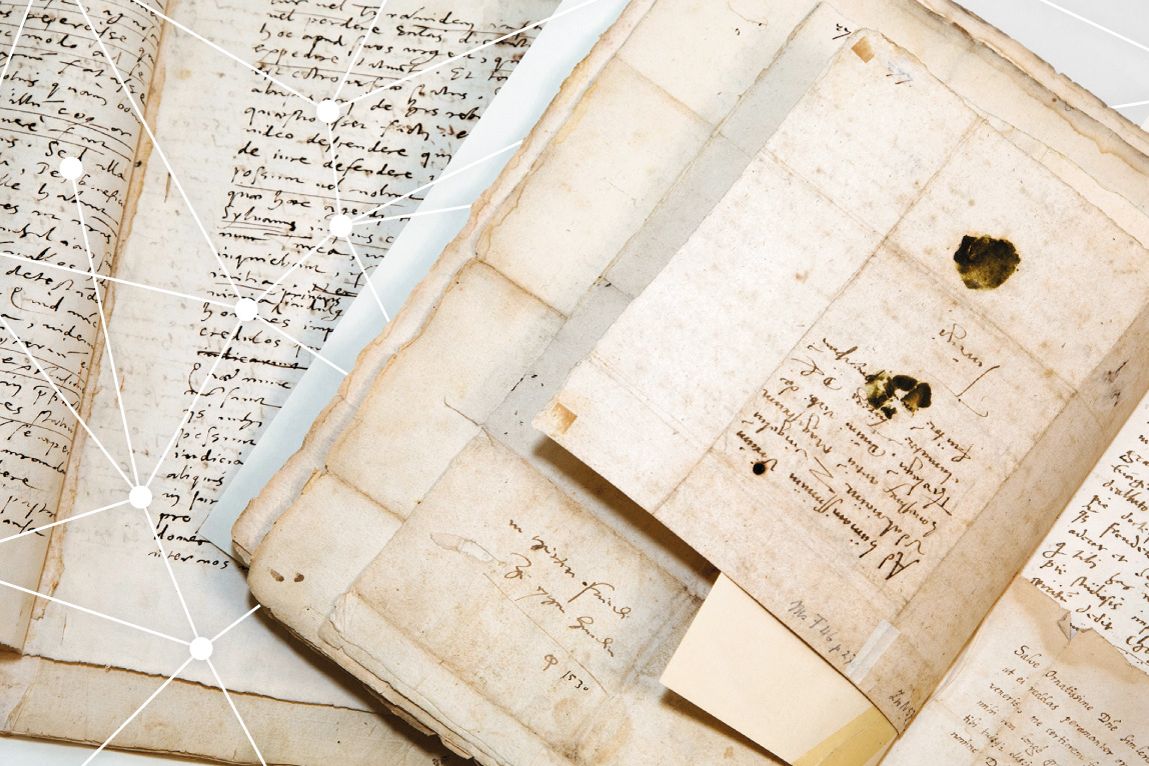
The Zurich Reformer Heinrich Bullinger (1504–1575), successor to Huldrych Zwingli, left Zurich an extensive collection of correspondence comprising some 12,000 letters. Through the “Bullinger Digital” project, this unique cultural heritage has been successfully brought into the digital age in two phases.
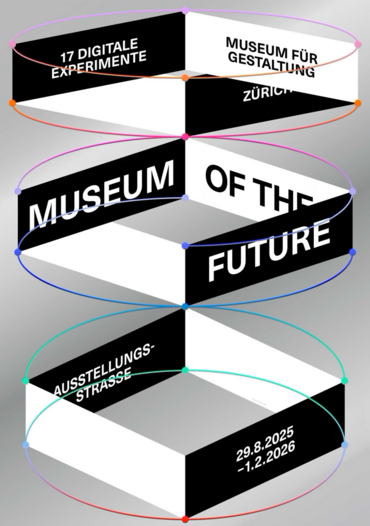
From August 29, 2025, to February 1, 2026, the Bullinger Digital project was part of the exhibition “Museum of the Future—17 Digital Experiments.”
On display were selected facsimiles from the extensive correspondence of the Zurich reformer Heinrich Bullinger with over 1,000 people. Videos demonstrated how AI is used for automatic handwriting recognition and machine translation of the texts.
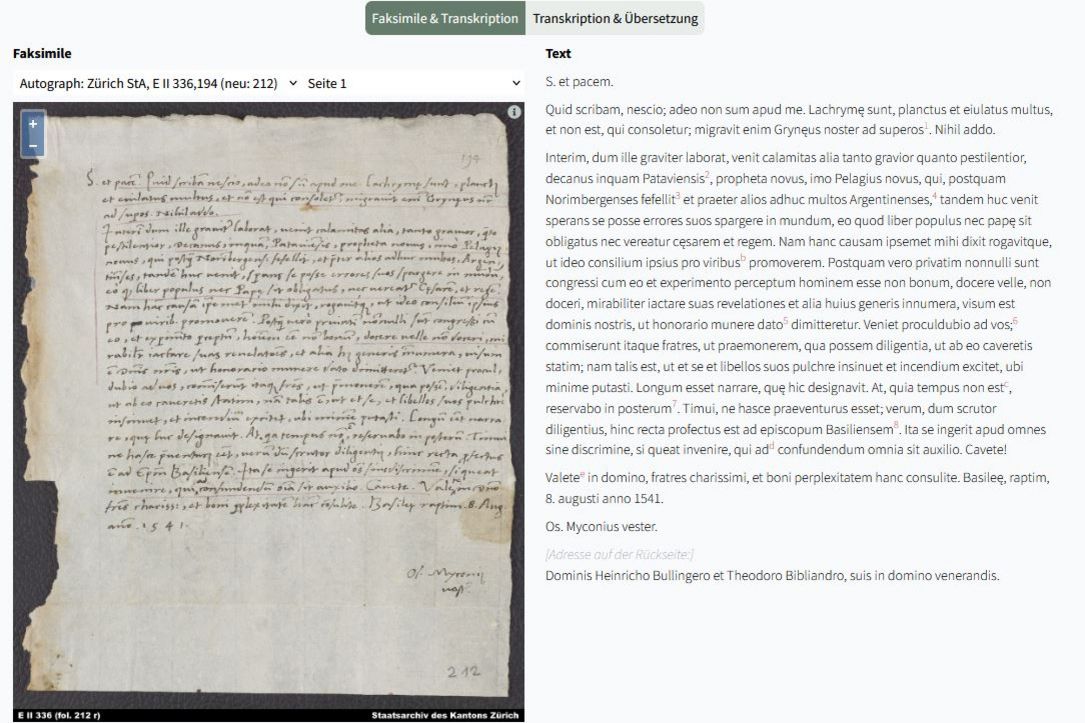
Over the past three decades, the Institute for Swiss Reformation History at the University of Zurich has edited approximately 3,000 of Bullinger’s letters. As part of the “Bullinger Digital 1.0” project, the entire collection of letters was photographed, digitally captured, and made available to the public. State-of-the-art technology was used: handwriting recognition based on artificial intelligence made the contents of the letters accessible and opened up new avenues in the previously extremely time-consuming process of transcription and editing.
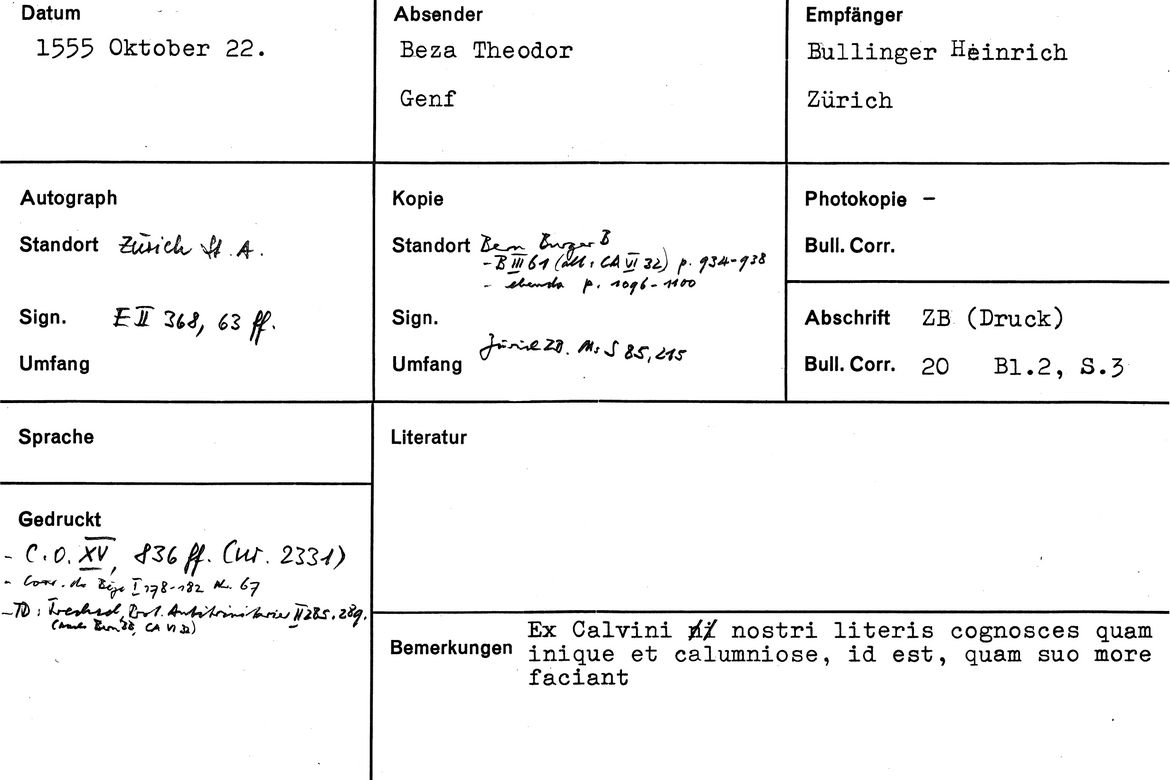
To provide an overview of the entire collection, several tens of thousands of handwritten index cards containing metadata such as date, sender, recipient, and archive location were first transferred to the database using optical character recognition (OCR). In addition, all facsimiles were digitized in high resolution, given standardized names, and linked to the corresponding metadata. For the automatic transcription, trained handwriting recognition software (HTR) was used, capable of processing various historical scripts, mixed languages, and the stylistic idiosyncrasies of the writers.
Individual steps in the process were carried out as a citizen science project with public participation. The letters, along with facsimiles, transcriptions, regesta, and a translation function, were published on the platform www.bullinger-digital.ch.
During the second phase of the project, the digital edition of the correspondence was expanded in terms of content and further developed technically. The platform was migrated to TEI Publisher, a publishing system for digital editions that enables the structured display, searchability, and sustainable development of historical text data. At the same time, an English-language version was added to the user interface, making the resource more accessible to an international audience.
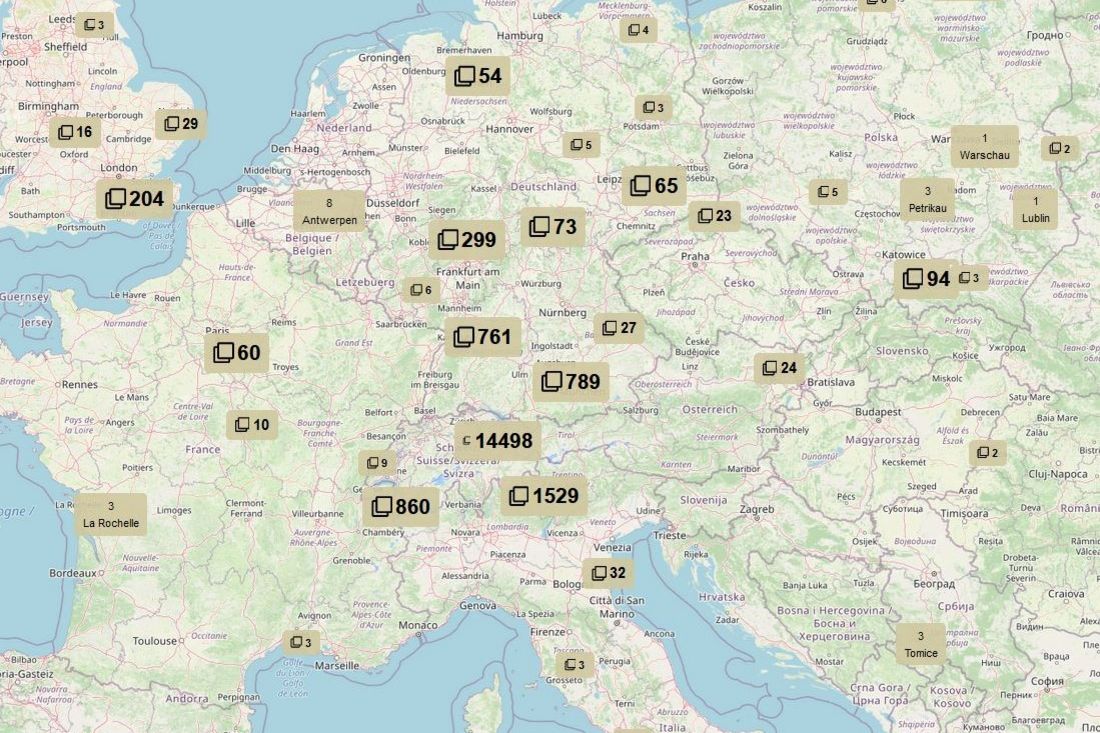
This phase of the project focused on the automatic recognition of personal and place names, which were linked to existing knowledge resources such as Wikipedia, GND, HLS, and Metagrid. These automated processes were supplemented by a citizen science project involving over a hundred volunteers. The letters were also cataloged by topic: In an iterative process, eleven overarching thematic areas were defined and applied to the entire corpus using large language models. Additionally, approximately 230 previously unprocessed letters were automatically transcribed, and all existing transcriptions and regesta were translated into English.
The transfer of all data and systems to the Zurich State Archives ensured the long-term availability of the edition. Starting in the fall of 2025, the project will also be part of the exhibition “Museum of the Future – 17 Digital Experiments” at the Museum für Gestaltung Zürich.
Funding: CHF 1,435,400 (of which 1,169,400 is for Bullinger 1.0 and 266,800 is for Bullinger 2.0)
Project duration: Three years (2020–2022) for Bullinger 1.0 and two and a half years (2023–2025) for Bullinger 2.0
Final status: The digitization of the 10,012 index cards, complete with metadata, was successfully completed. The resulting database now provides deep insights into Heinrich Bullinger’s extensive network of correspondence. With Bullinger Digital 2.0, the entire collection of correspondence was additionally indexed by content, linked thematically, and further developed technically. To ensure its long-term preservation, the complete digital edition was transferred to the Zurich State Archives. Starting in the fall of 2025, the project will also be part of the exhibition “Museum of the Future – 17 Digital Experiments” at the Museum für Gestaltung Zürich.
Many thanks to all donors who have made this valuable research possible!