
Funding That Makes a Difference: For 110 years, the Foundation for Scientific Research has supported projects across all faculties and disciplines at the University of Zurich. Applications are accepted from UZH professors and senior lecturers. The following examples illustrate the diversity of funded research.
Porf. Dr. Balthasar Bickel
Languages are remarkably systematic. When we describe an event, it is broken down into an expression for the action, an expression for the person performing the action – the so-called agent – and an expression for the person affected by the action – the patient. Where does this pattern come from?
In a series of experiments co-funded by the Foundation for Scientific Research, we collaborated with a team at the University of Neuchâtel to discover that great apes also parse events according to this pattern, even though there is (so far) no evidence of it in their communication. When gorillas, orangutans, chimpanzees, and humans are shown video clips, they all systematically look back and forth between the agent and the patient until it becomes clear what is happening. Statistical models that do not distinguish between agent and patient cannot explain the gaze patterns in our recordings.
In language, there is another factor at play: our brains favor the agent. When it becomes clear at the end that the wrong part of a sentence was identified as the agent, this is reflected in an electrophysiological signal that can be measured using electroencephalography (EEG). We have also found a similar effect in great apes. When given the choice to tap the agent or the patient at the end of a video (on a touchscreen), all species tend to prefer the agent.
Overall, our research shows that a core feature of human language is rooted in a specific event decomposition that has deep evolutionary roots. These roots extend back to the last common ancestor of great apes approximately 12 million years ago, but we suspect that the schema is much older. Future experiments will test this.
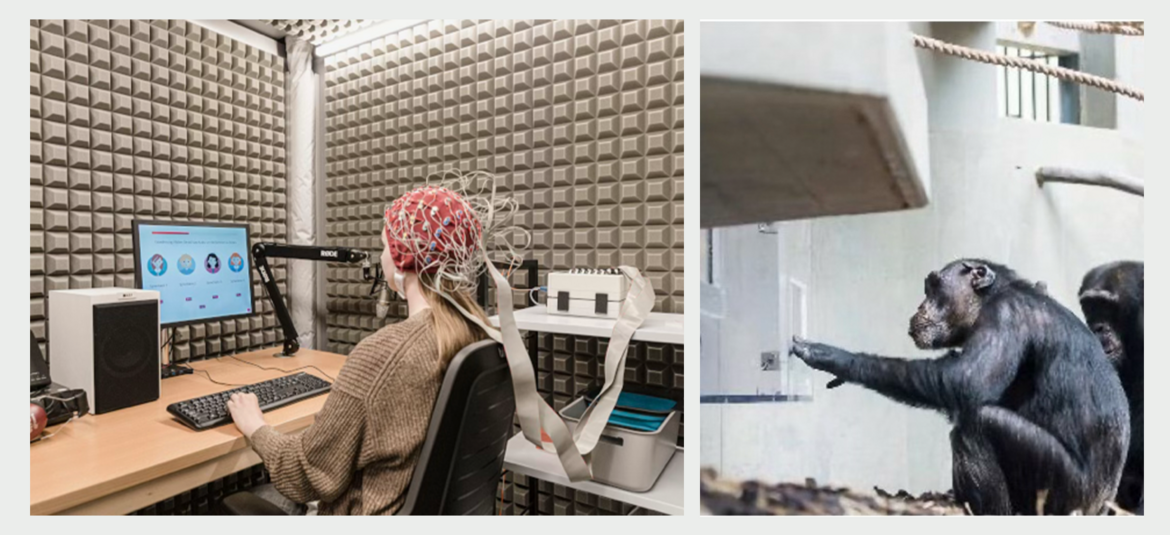
Humans and great apes prefer the object that performs the action.
Prof. Dr. Mareile Flitsch
How can ethnographic collections contribute to peacebuilding, empowerment, and the transmission of knowledge?
This project focused on the legacy of ethnologist Lorenz Löffler, who conducted research in the Chittagong Hill Tracts in what is now Bangladesh in the 1950s. Together with indigenous communities, he documented their daily lives and knowledge through audio recordings, film, photographs, and written texts – immediately prior to the construction of a dam, forced displacement, and widespread violence in the region. The project examined the significance of these historical collections for young indigenous people today and explored how they can be reinterpreted through collaborative research and museum initiatives.
As part of a transnational student exchange, students from Bangladesh and Switzerland worked together with the collections from the Chittagong Hill Tracts. The results were presented in a student pop-up exhibition at the Museum of Ethnology at the University of Zürich and at an international conference, demonstrating that ethnographic archives are not only sources of the past but also resources for the present and the future. The project has thus provided an important impulse for collaborative research, for the relevance of ethnographic collections in societal healing processes, and for further follow-up projects.
A transdisciplinary follow-up project (also funded by the Foundation for Scientific Research) focuses on analyzing a historical photo collection related to the Kaptai Dam. The collaboration will begin in the fall of 2026.
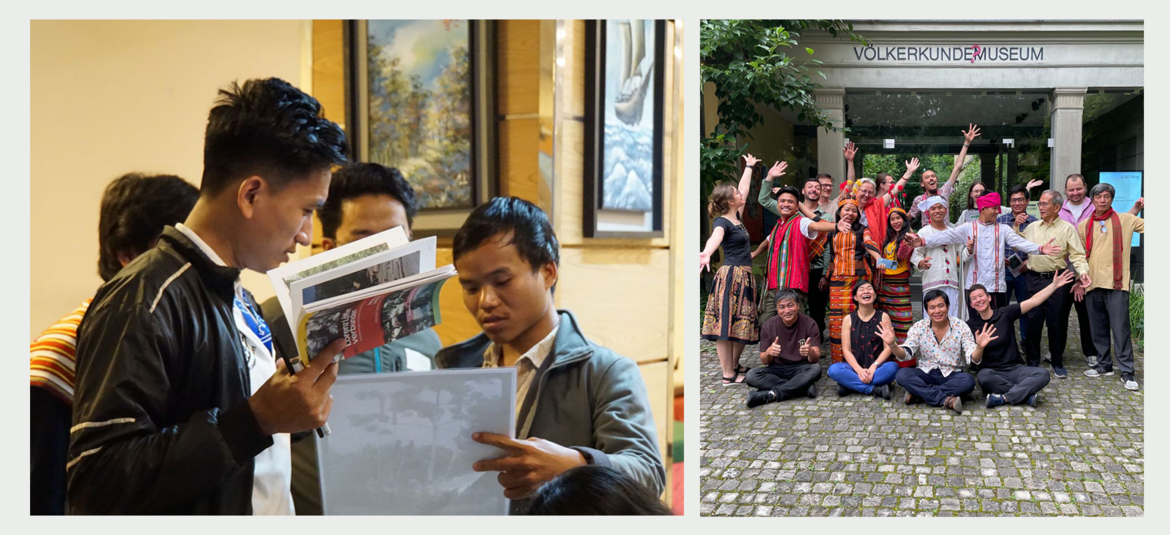
Students from Bangladesh and Switzerland work together.
Prof. Dr. Moritz Daum
Prof. Dr. Stephanie Wermelinger
During the COVID-19 pandemic, our social lives changed dramatically. Many adults wore masks, children interacted with others less frequently, and stress levels were high in many families. This raised an important question: Did this unique period affect children’s social development?
In a project funded by the Foundation for Scientific Research at the University of Zurich, we investigated this question. In three studies, we compared various social skills in infants and children with and without pandemic experience. In particular, we measured how the children followed the gaze of others and shared their attention with them. These early skills are important for children to interact with others, share experiences, and learn from one another. They help children share experiences and coordinate thoughts and behaviors. We also examined whether preschoolers recognized emotions in faces just as well during the pandemic as they did before the pandemic.
The result was surprisingly clear: There was no evidence that pandemic experiences had impaired the social development of the children studied. It appears that key social skills continued to develop steadily despite the unusual circumstances.
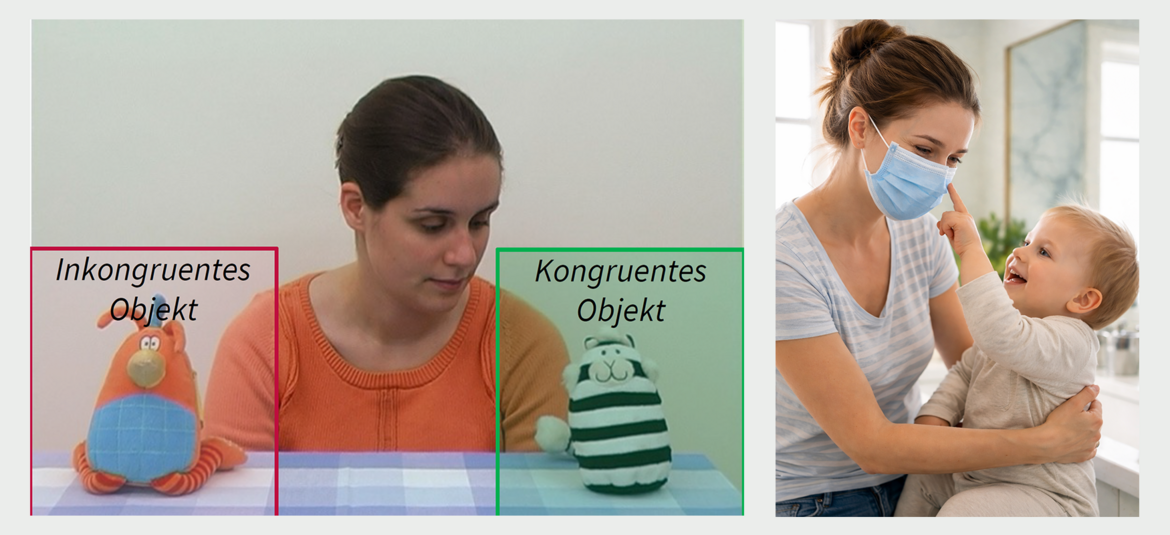
Does the experience of the pandemic influence the interpretation of the direction of gaze observed?
Prof. Dr. Lucas Leemann
The essence of democracy relies on voter participation—yet turnout is steadily declining, particularly among young people. Voting habits are often formed in early adulthood, making it all the more important to encourage civic engagement among youth who are not yet active participants. Changing social structures and the rise of digital interaction further complicate this challenge.
Prof. Dr. Lucas Leemann and his team are addressing this issue by identifying the various patterns of voter participation among different groups of young people in the 21st century. This typology allows for the development of targeted strategies to increase turnout within specific youth demographics.
Using both qualitative and quantitative experimental methods, the project focuses on three key factors: ability, motivation, and the influence of social norms. These approaches help measure the effectiveness of voter engagement strategies in targeted groups. Equipped with detailed data on which methods work best for different youth segments, the team is developing an intervention algorithm. This algorithm recommends customized engagement packages tailored to the sociodemographic profiles of local youth electorates, aiming to provide an optimal strategy for increasing voter turnout.
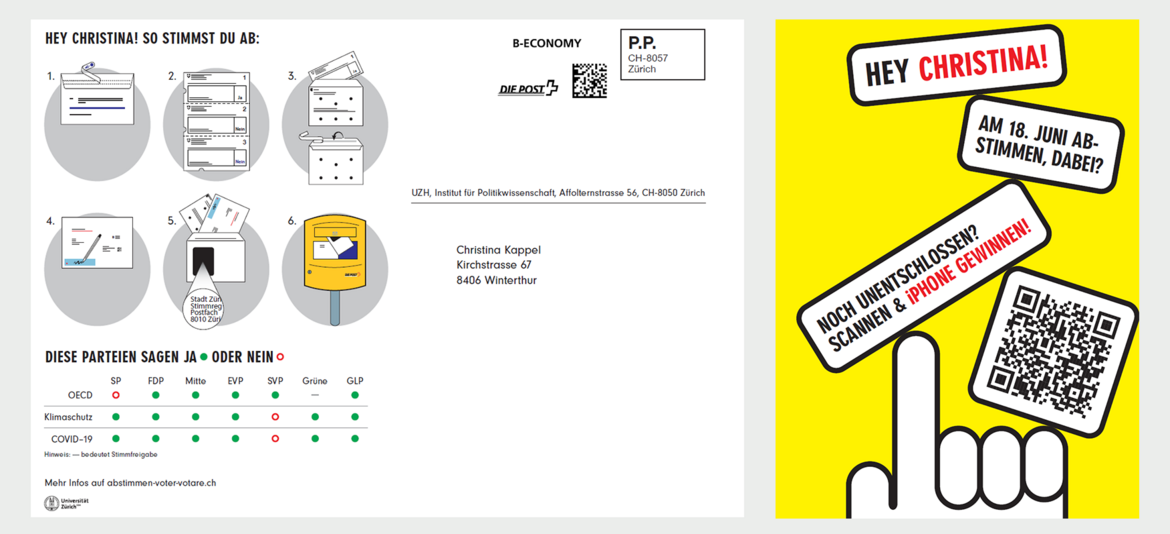
A project-developed postcard promoting youth voter participation.
Prof. Dr. Anna Lindholm Krützner
Understanding how to promote health in aging and identifying related genetic factors has long been of both theoretical and practical interest. Biological age can be measured using biomarkers—among them, epigenetic changes such as methylation patterns at CpG sites in the genome.
Prof. Dr. Anna Lindholm Krützen and her team are developing a novel "epigenetic clock" based on non-invasively collected fecal samples—an animal welfare-friendly alternative to traditional methods. The team draws on data from a 20-year UZH field study tracking behavior and lifelong fitness in wild house mice, as well as a parallel study on a UK island examining mouse behavior, ecology, and microbiomes.
Because these wild mice are observed from birth to death, they are ideal for identifying the factors that influence biological aging. By comparing aging patterns across both island and mainland populations, the researchers aim to derive broadly applicable insights. Their findings show that a higher epigenetic age correlates with lower adult survival, greater past reproductive effort, and smaller social networks. This animal-friendly research model may offer valuable parallels for human medical studies.
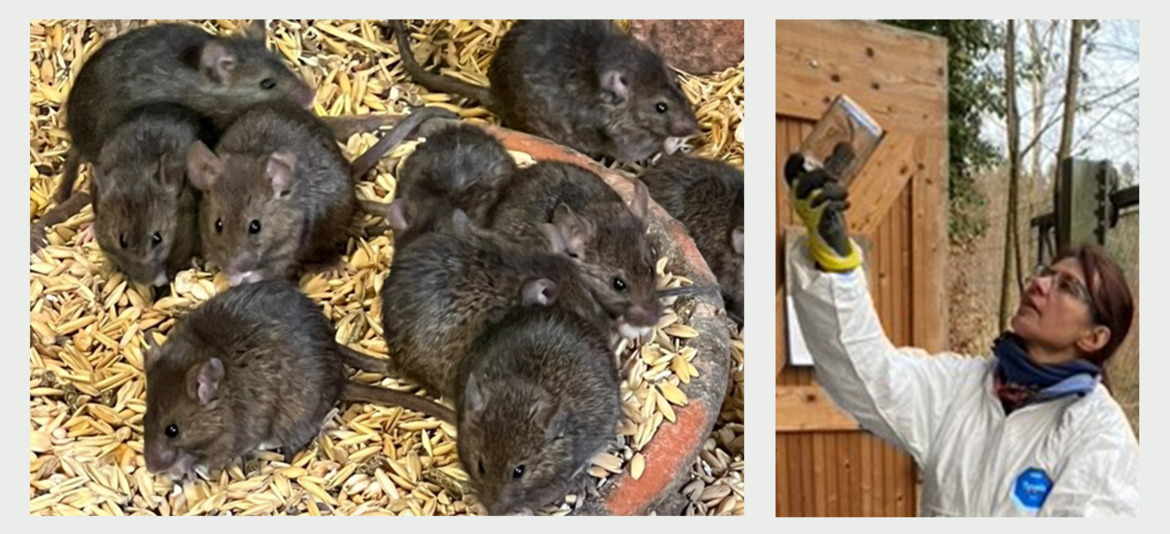
The research team investigates epigenetic aging mechanisms in wild mice.

Prof. Dr. Simone Hornemann
Alzheimer’s disease and the rare prion disease are progressive neurodegenerative conditions. Both involve the formation of harmful protein aggregates (amyloids), which cause nerve cells in the brain to die—leading to cognitive decline and motor dysfunction. Despite decades of research, no curative therapies exist. A diagnosis often brings major medical, social, and economic challenges for patients and families alike.
Passive immunotherapy using antibodies shows promise, but current approaches face limitations: antibodies often target only a narrow range of pathological aggregates. For better therapeutic outcomes, broader recognition of aggregate types is essential.
Prof. Dr. Simone Hornemann and her team are addressing this by developing a novel therapeutic conjugate. It consists of a synthetic molecule that binds a wide spectrum of harmful aggregates, combined with a ligand that activates the immune system to clear them. Early experiments using cultured brain tissue and cell models show encouraging results: the conjugate reduces neurotoxicity in prion-infected tissue slices.
The research team is now assessing the conjugate’s pharmacokinetics, acute toxicity, and therapeutic potential in mouse models of Alzheimer’s and prion diseases. This work could pave the way for innovative treatments for neurodegenerative disorders.
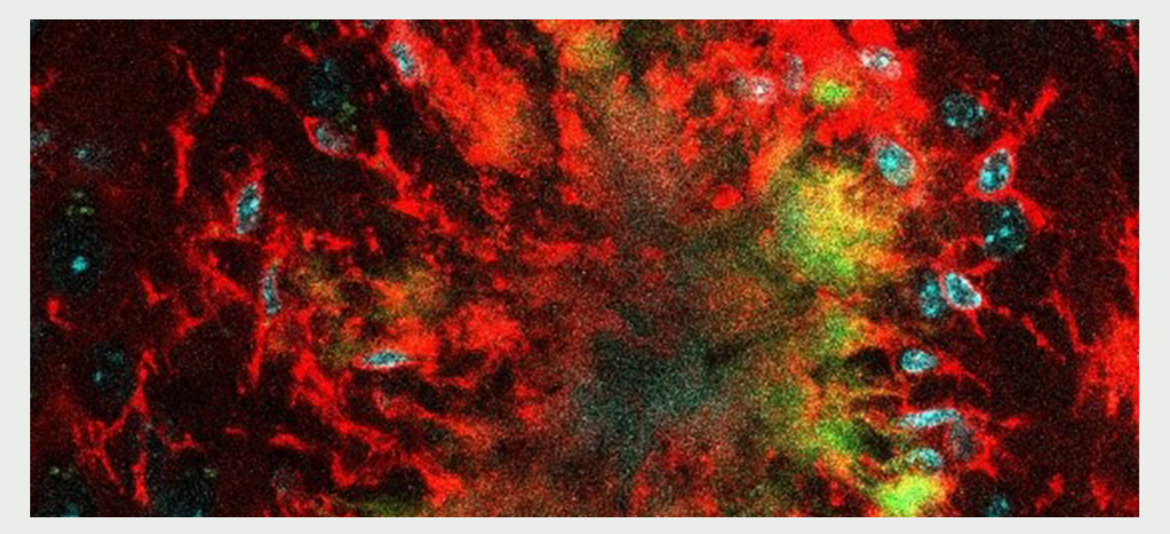
Fluorescence staining of a mouse brain section